
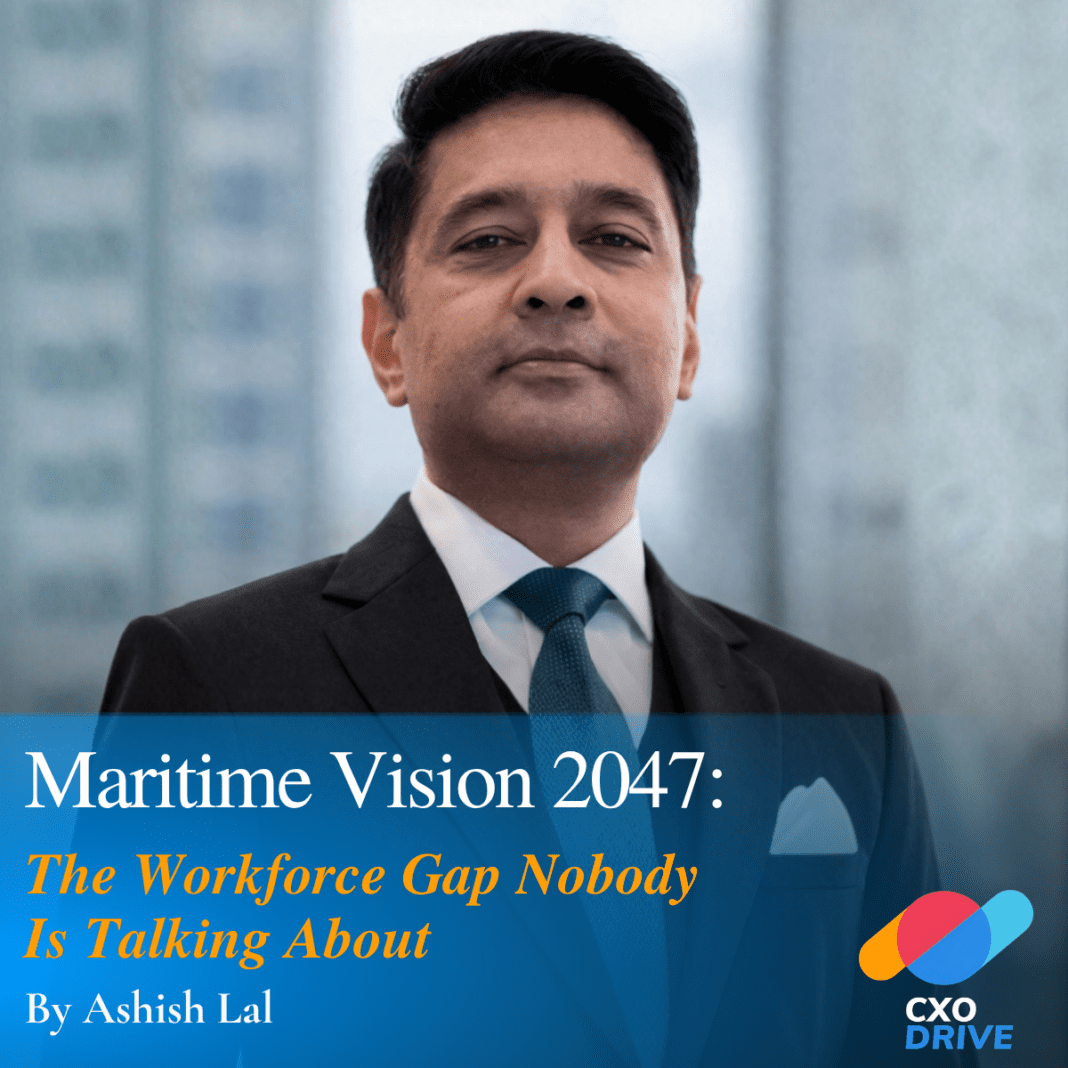

By Ashish Lal
India’s Maritime Vision 2047 aims to position the country as a global maritime and shipbuilding powerhouse through large-scale infrastructure expansion, defence manufacturing, and logistics modernization. However, while the focus largely remains on investments and industrial growth, one critical challenge continues to receive far less attention — workforce readiness.
The maritime sector is entering a phase where growth ambitions are rapidly outpacing the availability of skilled talent. Building future-ready shipyards and industrial ecosystems will require not only capital and technology, but also scalable workforce strategies, leadership development, and continuous capability building.
Currently serving as General Manager – HR at Swan Defence and Heavy Industries (SDHI), Ashish Lal is leading HR transformation initiatives focused on workforce scaling, governance frameworks, industrial relations, and organizational capability development for a workforce of over 3000 employees. Through HR digitalization, structured learning programs, and strategic workforce planning, he has focused on improving operational agility and workforce readiness within complex industrial environments.
Prior to this, Ashish spent over a decade with the Government of India, where he held senior leadership roles across workforce strategy, operations, and administration. His experience across public sector leadership and industrial workforce management gives him a strong perspective on the structural talent challenges facing India’s maritime ambitions.
According to Ashish, India’s long-term maritime success will depend not only on infrastructure development, but on the ability to create skilled, adaptable, and deployment-ready talent ecosystems. As the sector evolves through automation and modernization, the real differentiator will be how effectively organizations invest in people, capability building, and future workforce leadership.